|
Blogs in space
 |
|
| | |
Alia Papageorgiou looks at a sample of Greek Australian blogging on that highway of information known as the Internet.
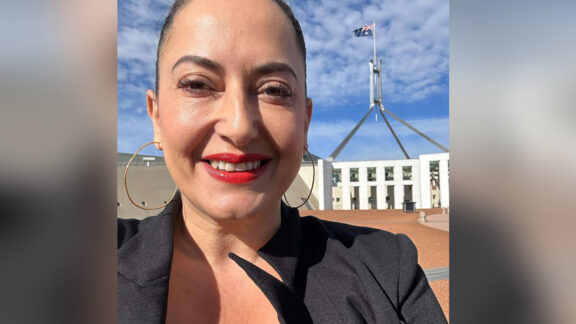
Toula's Digital Kulcha Blog Occasional musings, news and views. I run a small multimedia enterprise called Digital Kulcha that aims to support community organisations to humanize the process of learning and getting online in this weird and brave new world of ours.
Thursday, February 15, 2007 When I first embarked on this blog journey I did it for two reasons: 1. To experiment with the form and to see if it was something I could get in to 2. To keep up with the "Technorati's" (formerly known as "The Jones's")
These days it seems that everyone's trying to keep up with the Technorati's, from all walks of life. Blogs have been around since 1999 when a small company called Pyra Labs opened up in San Francisco by three friends trying to make their mark on the Internet world. Although they experienced their fair share of ups and downs in 2002 Google decided to buy blogger.com out and since then the team has been incorporated into Google's structure.
Technorati.com is a site that tracks blogs on the internet putting today's blogs at a staggering number of 74.9 million, with 175,000 blogs being created per day, 2 blogs created per second and 1.6 million daily postings making their way through DSL cables and dial up lines to PC's around the world today.
A blog is like a free personal diary where anyone can place thoughts, links to the world, news, photos, their opinions and many other media in an Internet space run by them and handled by their aesthetic.
Notes to the world from one's own computer on a recurring basis, blogs have held their ground, been through two booms in the internet world, one in 2002 and one in 2004 and have opened up avenues for commentators in ways not before experienced.
There are successful political blogs, major newspapers now have their own blogging staff on board showing that such a space can impact politics, bring journalism to a new level and enable millions of people to communicate and connect.
Greek Australian blogger Anastasia from Sydney saw the blog as a new medium to put her fiction out into the world in 2005, the same year she left a high pressure job.
"I wanted to take a different route and explore the issues that popular women's magazines like Cosmopolitan didn't discuss at length or if they did discuss them, they were - in my opinion - stylised," says Anastasia of her blog www.chaosnoir.com
It's also opened more doors for Anastasia having short stories published overseas, in North America. "I've won a couple of short story competitions and I've had my blog featured in a UK women's print magazine (Scarlet)."
She describes the blogging world as one, which permits many opinions to be read.
"And it's also enabled me to brush up on my Greek. There are thousands of bloggers from Greece who write using Greek text," said Anastasia.
What is more common for most bloggers is the promotion that their work can receive from this format.
Like Toula Karayiannis of Digital Kulcha Blog, which aims to put a more human face to her company's profile.
Her profile gets personal, detailing adventures with her nephew and photos of her Christmas Day walk, this raising the important issue of privacy.
As a traveller who wanted to keep her family and friends up to date on her adventures Toula began blogging in 2006 from Stockholm.
But her experience so far has meant a moderation of the content "at first I conceived of blogging as just an online form of my journaling. But time constraints and the very public nature of blogging curtailed those first enthusiastic attempts," shared Toula.
How much is too much to put on the net and how much is not enough?
Anastasia of www.chaosnoir.com has not used her own surname to signature the blogs but rather she has taken on her mother's maiden name as a token of privacy.
"I tend to give my perspective as a Greek, as a child of immigrants and how the subject of relationships, dating and sexuality has affected me in relation to my culture and how I deal or have dealt with that over the years. So I do bring a different perspective that's far removed from the common ethnic humour angle," said Anastasia.
"It may be considered too much information for some, as people rarely discuss certain elements of their lives in depth to strangers, particularly in areas that concern human relationships."
Anastasia reflects that although there are many blogs, the key to longevity requires content variation and creativity. There are as many 'dead' blogs as there are live blogs, she said.
Toula Karayiannis views her blog as a self publishing experiment, "being able to publish my own work without the intermediary of a publishing house or censor appealed to my strong beliefs about open, free and democratic expression.
"Not all blogs shake the foundations of a society," all blogs are different because everyone is aiming at a different result, however Toula did mention some like Bagdad Burning (www.riverbendblog.blogspot.com) as attaining "modern day legendary status," and an example of a site that influences world opinion.
Toula's modest aims are merely to perform a personal experiment.
"As a writer and journal keeper since the age of 14 I have always been enthralled by language as the main form of human communication currency and how it shapes and constructs our various realities," said Toula sharing her fascination with anything that humans take up in such large numbers, wanting to be on the inside and "walk the talk!"
The Greek Australian nature of her upbringing has always fuelled her need for communication "as a bi cultural woman my life has been devoted to translating the world around us to family, friends, students and now clients (as well as trying to make sense of it for myself).
"There are various ways of knowingand if you are a migrant to this country or outside the mainstream for any reason it is difficult to absorb these 'socio-cultural knowing'. I think Australian born second generation children are well placed to be these socio-cultural translators.
"We have done it all our lives whether it be providing a running commentary as you watch the news with your father, explain and translate the purpose of a census form to your aunty or accompany your folks to the poling booth and show them how to vote for a bunch of people they don't know."
With blogging she feels a similar kinship and a first hand involvement which leads her to better explain, share, teach and translate it to others in a manner and in a language that they understand.
Last week The Age reported a debate sparked up over a code of ethics to be introduced to the blogosphere as suggested by Internet publisher Tim O'Reilly - who coined the phrase 'Web 2.0. - and Wikipedia founder Jimmy Wales.
They have publicly come out and encouraged a "Blogging Code of Conduct" following disturbing death threats posted on Kathy Sierra's site, author and speaker.
Questions about ongoing freedom of speech are key arguments by outraged bloggers who have seen the first draft released last week and have called on the authors to refrain from their controlling ideas.
The rules outline that content could be deleted if it involves threats, libel, abuse, if the content is false or if it violates the promises of confidentiality or rights of privacy.
Complaints have come through from bloggers opposing rules relating to anonymity, stating that this would stop comments from countries where the ruling parties are not in favour of free speech.
Technorati founder David Sifry, was reported in The Age as saying that "Bloggers are always free to remove what they see as inappropriate contributions to forums on their websites." |